Custom Mosaic Tile, Designed for a Space That Refuses to Blend In
Color is officially back in interior design, and Three Taverns on Ponce is proof.
Inside the new Three Taverns Ponce Brew Terminal in Atlanta, bold color, architectural curves, and custom mosaic tile come together to create a space that feels electric, nostalgic, and completely unforgettable. Designed in collaboration with Gentle Works, an Atlanta-based design practice offering architecture, planning, and interior design services, this project shows exactly what happens when designers use tile as a storytelling tool — not just a finish.
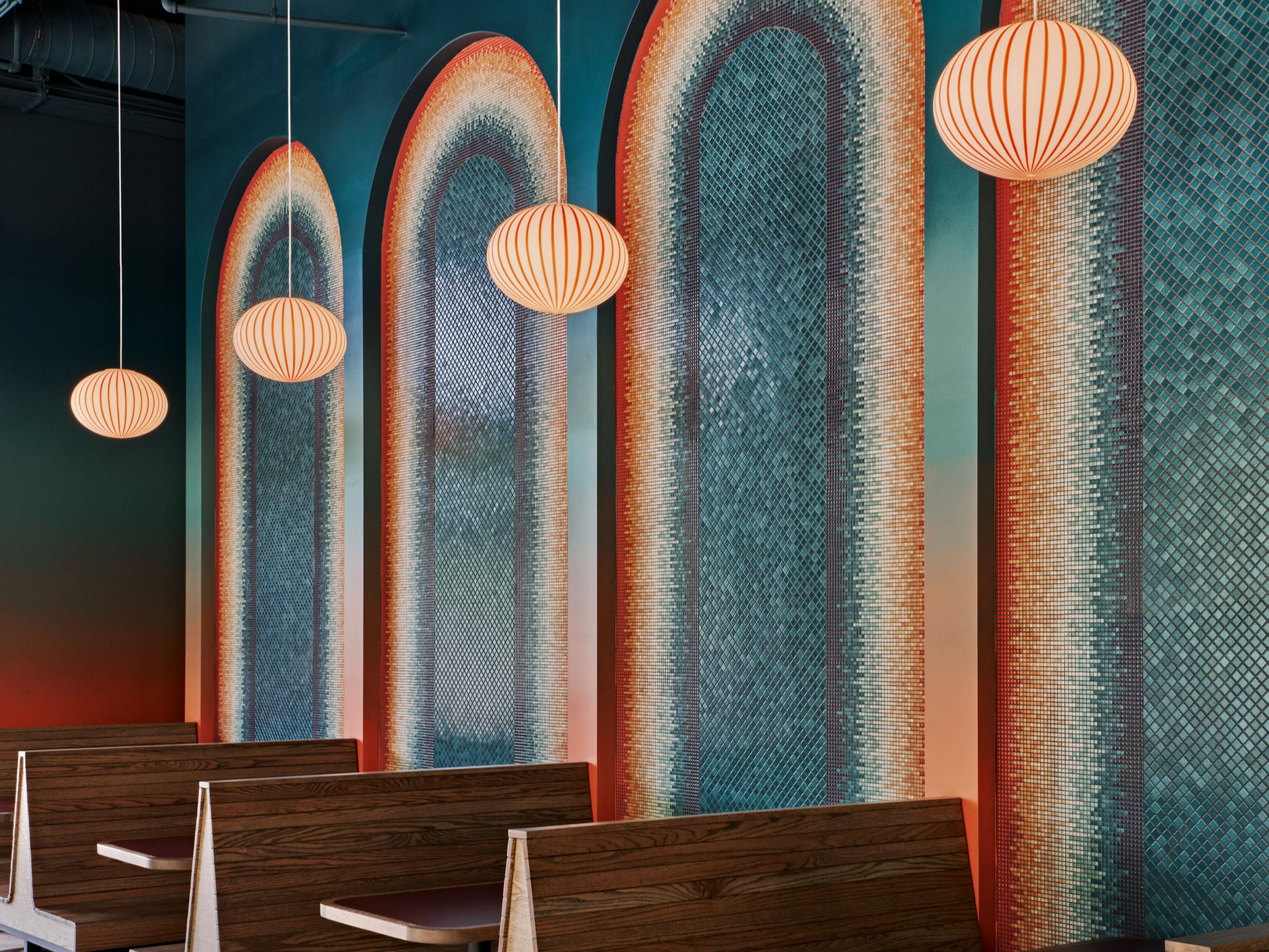
For this installation, Audrey Lane’s Muralist custom mosaic program was used to create a series of dramatic arched mosaic features that wrap the banquette wall with saturated color, texture, and movement. The final result feels part retro glow, part modern hospitality, part full-on design moment.
And honestly? It’s the kind of wall people will absolutely stop to photograph.
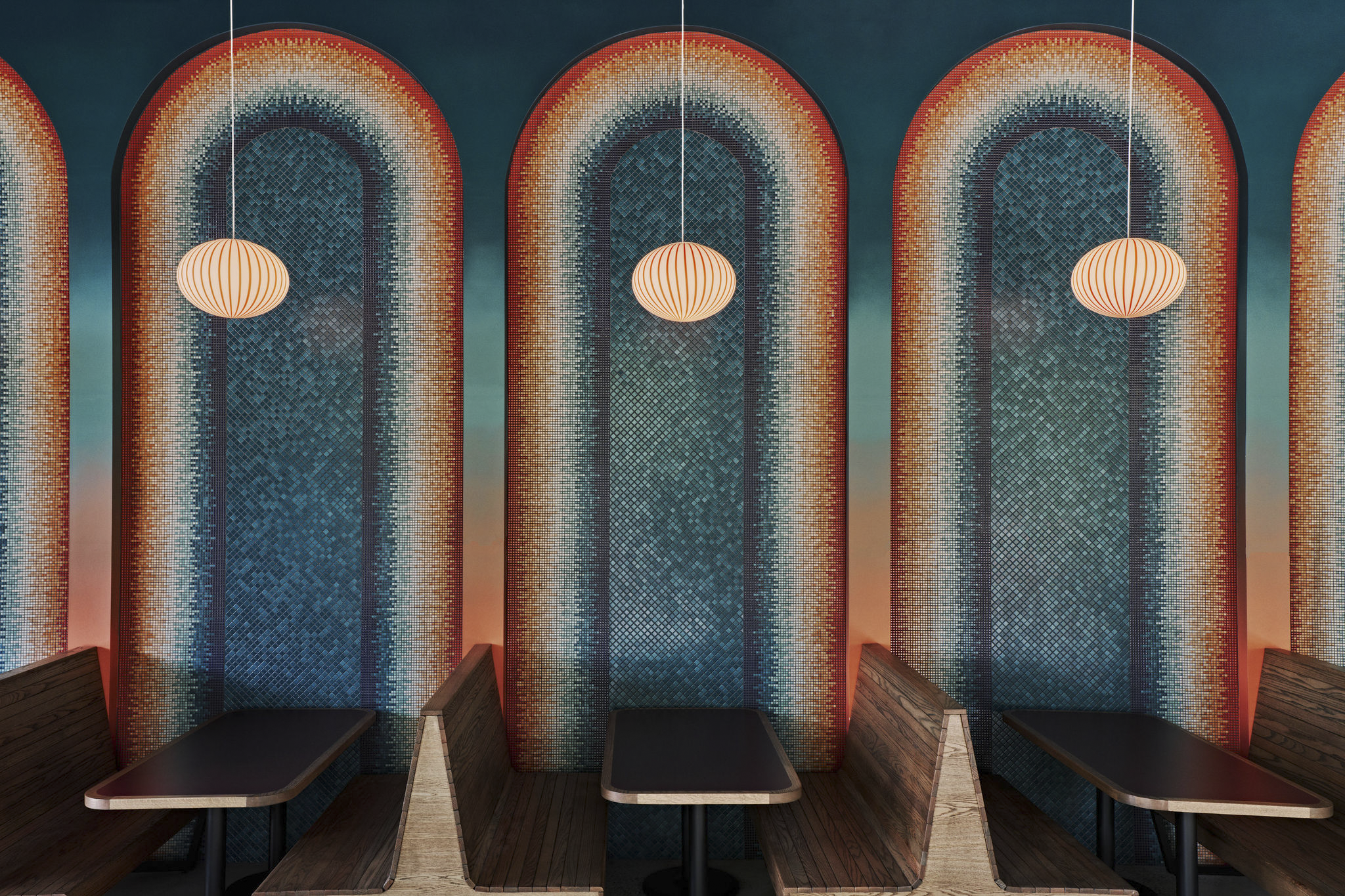
Custom Muralist mosaic arch installation at Three Taverns on Ponce by Audrey Lane and Gentle Works
The Project: Three Taverns on Ponce in Atlanta, GA
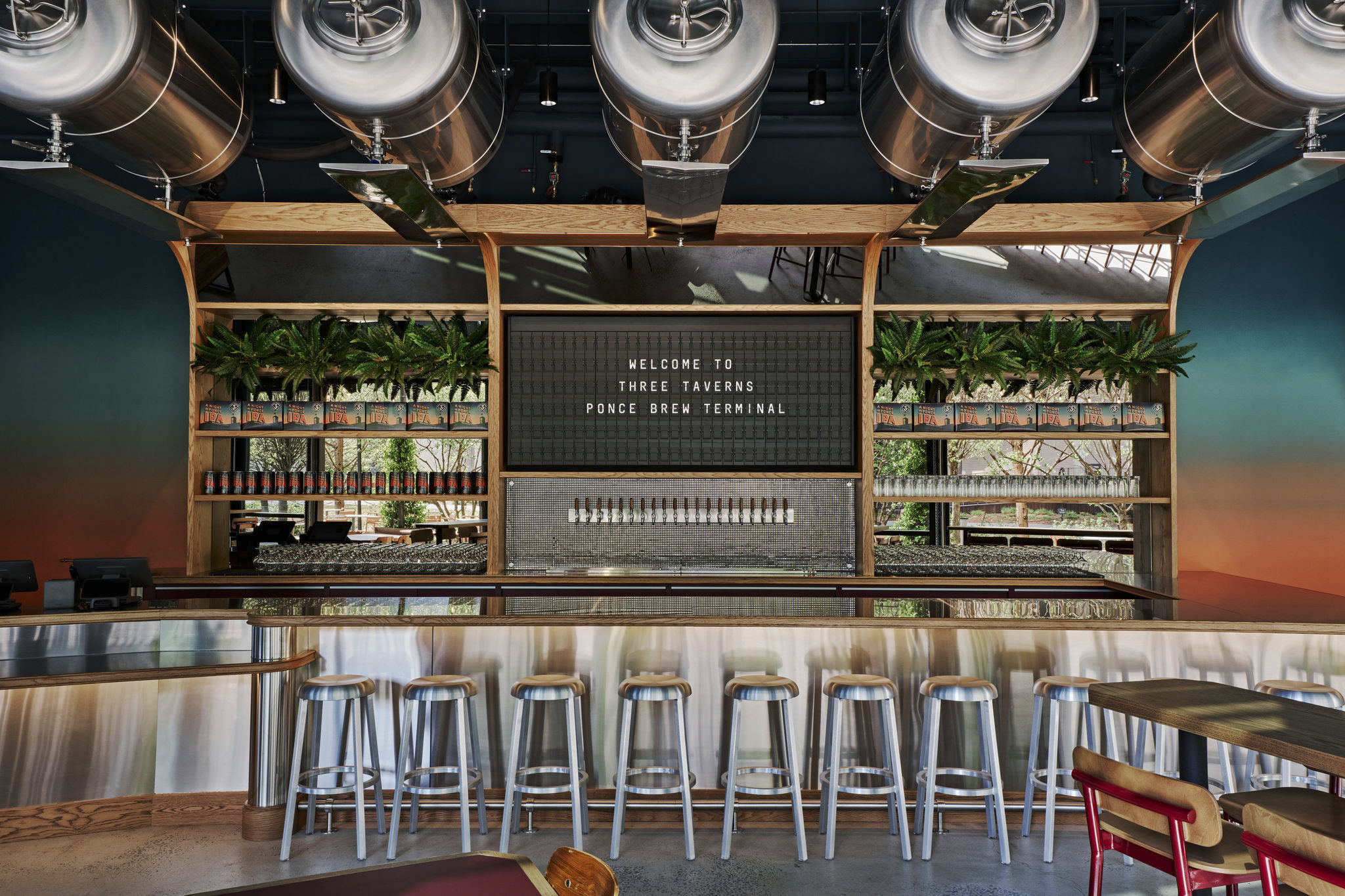
Located at Ponce City Market along the Atlanta BeltLine, Three Taverns Ponce Brew Terminal brings together beer, distilling, cocktails, food, and a strong sense of place in one highly visual hospitality environment.
The interior design draws from the brand’s identity, the building’s industrial history, brewing equipment, and the surrounding rail corridor. Rough Draft Atlanta reported that Gentle Works pulled color inspiration from Three Taverns’ flagship A Night on Ponce packaging, while also referencing the metallic sheen of brewing equipment and the legacy of the nearby rail corridor.
That context makes the custom mosaic arches feel especially intentional. They are not just decorative. They connect the space to the brand, the neighborhood, and the experience of being there.
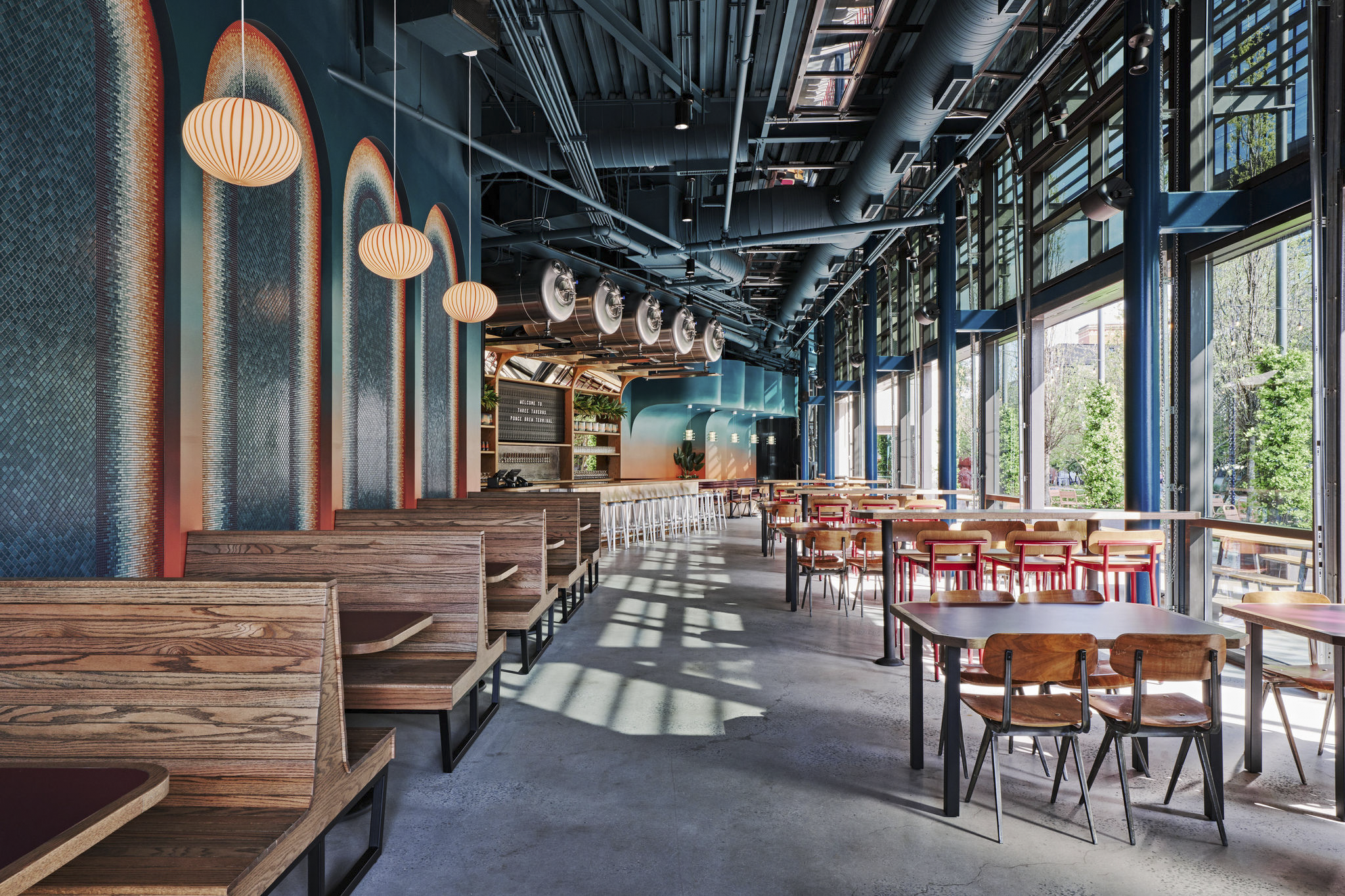
Colorful custom mosaic tile arches in Atlanta brewery interior
Why Color Is Back in a Big Way
For years, commercial interiors leaned heavily into neutrals: white walls, safe finishes, muted palettes, quiet minimalism. Beautiful? Sometimes. Memorable? Not always.
Now, designers are bringing color back with confidence.
In hospitality, color does more than brighten a room. It creates energy. It sets the tone. It helps guests remember where they were, what they felt, and why they want to come back.
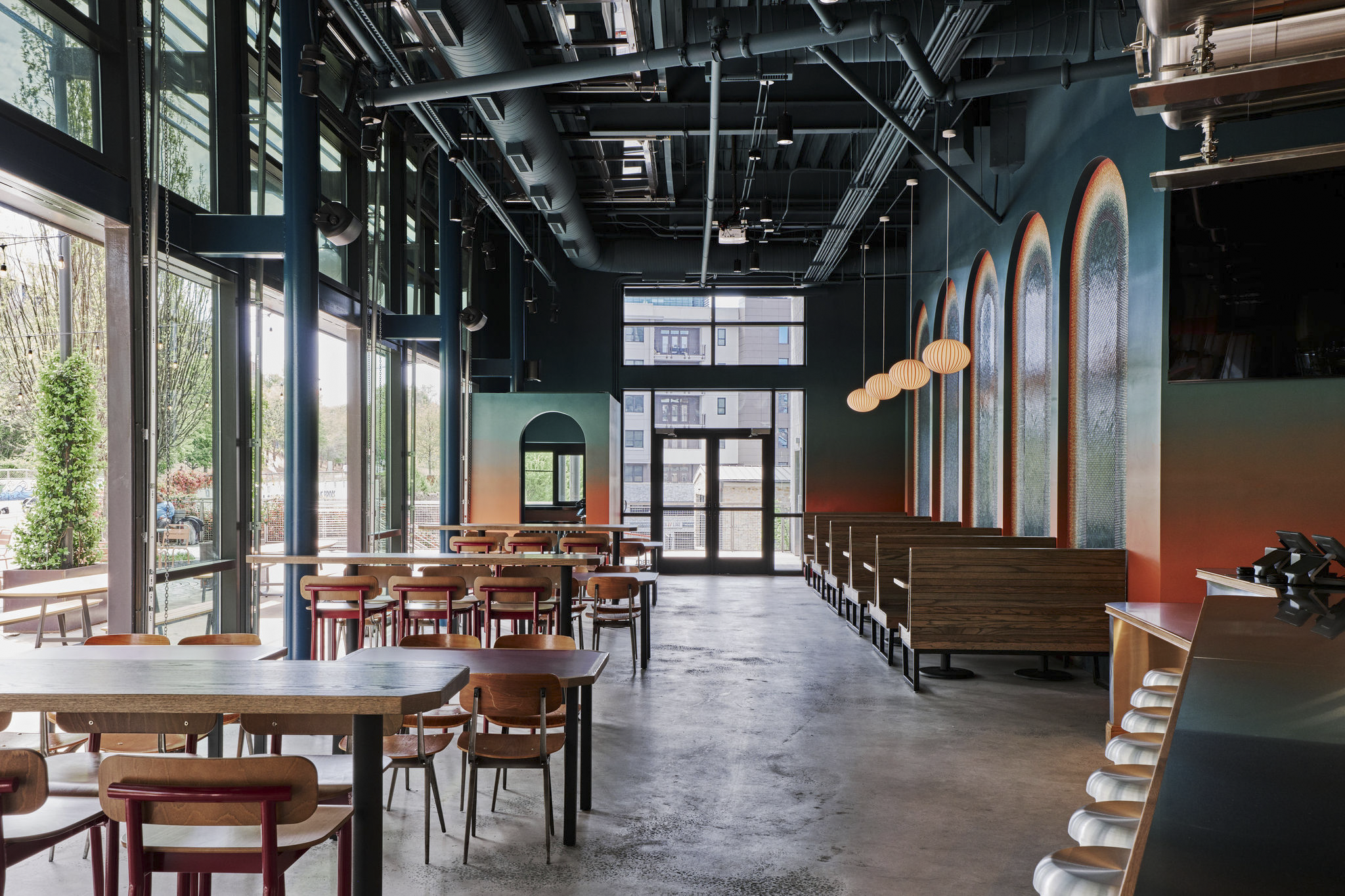
At Three Taverns on Ponce, the mosaic arches do exactly that. The deep blues ground the space, the aqua tones add freshness, and the warm coral-orange glow brings a sense of movement and heat. Paired with the wood banquettes, industrial ceiling, large-scale windows, and glowing pendant lights, the mosaic becomes the visual heartbeat of the room.
This is not color for color’s sake. It is color with purpose.
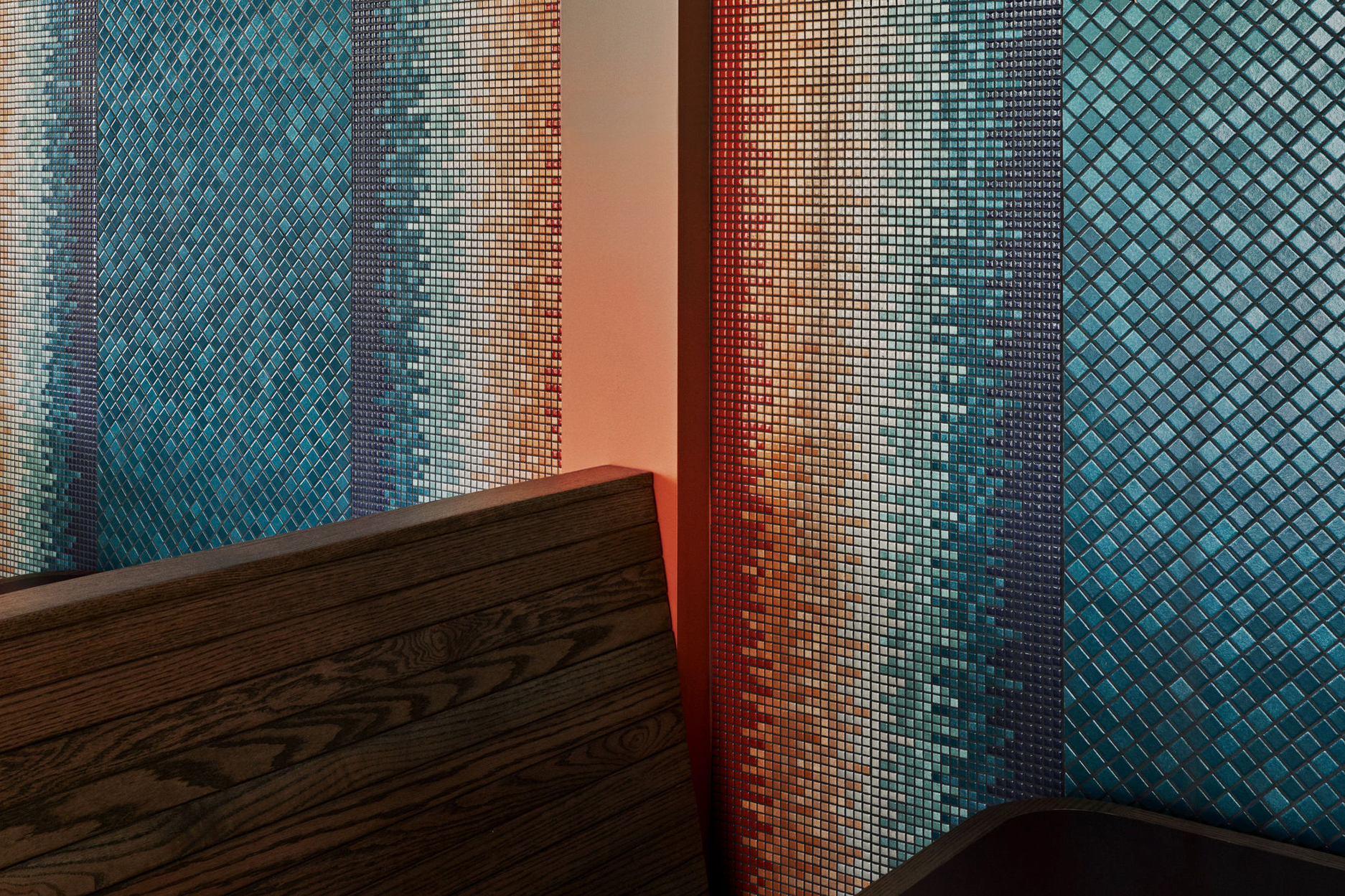
Close-up of Audrey Lane Muralist mosaic gradient in blue, coral, linen, and teal
The Design Concept: Color, Curves, and Custom Mosaic Storytelling
The Muralist design for Three Taverns on Ponce features five oversized archways, each built from tiny mosaic pieces that shift from deep blue to teal, linen, warm gold, orange, and coral. The gradient effect creates a glowing, almost illuminated border around each arch.
According to the Audrey Lane specification sheet, each custom mural arch was designed at 72" wide by 168" high, produced on 12" x 12" mosaic sheets, with a 1/32" grout width, and specified for wall application. The design included 60 sheets and 48.26 square feet per arch configuration.
The selected mosaic colors included Dark Blue, Aralia, Mandragora, Linen, Tiglio, Alchechengi, and Coral, creating the layered color transition seen in the final installation.
This is where Muralist shines: it allows designers to turn a color concept into a highly detailed, buildable mosaic feature — complete with sheet mapping, color percentages, tile counts, and visual layout guidance.
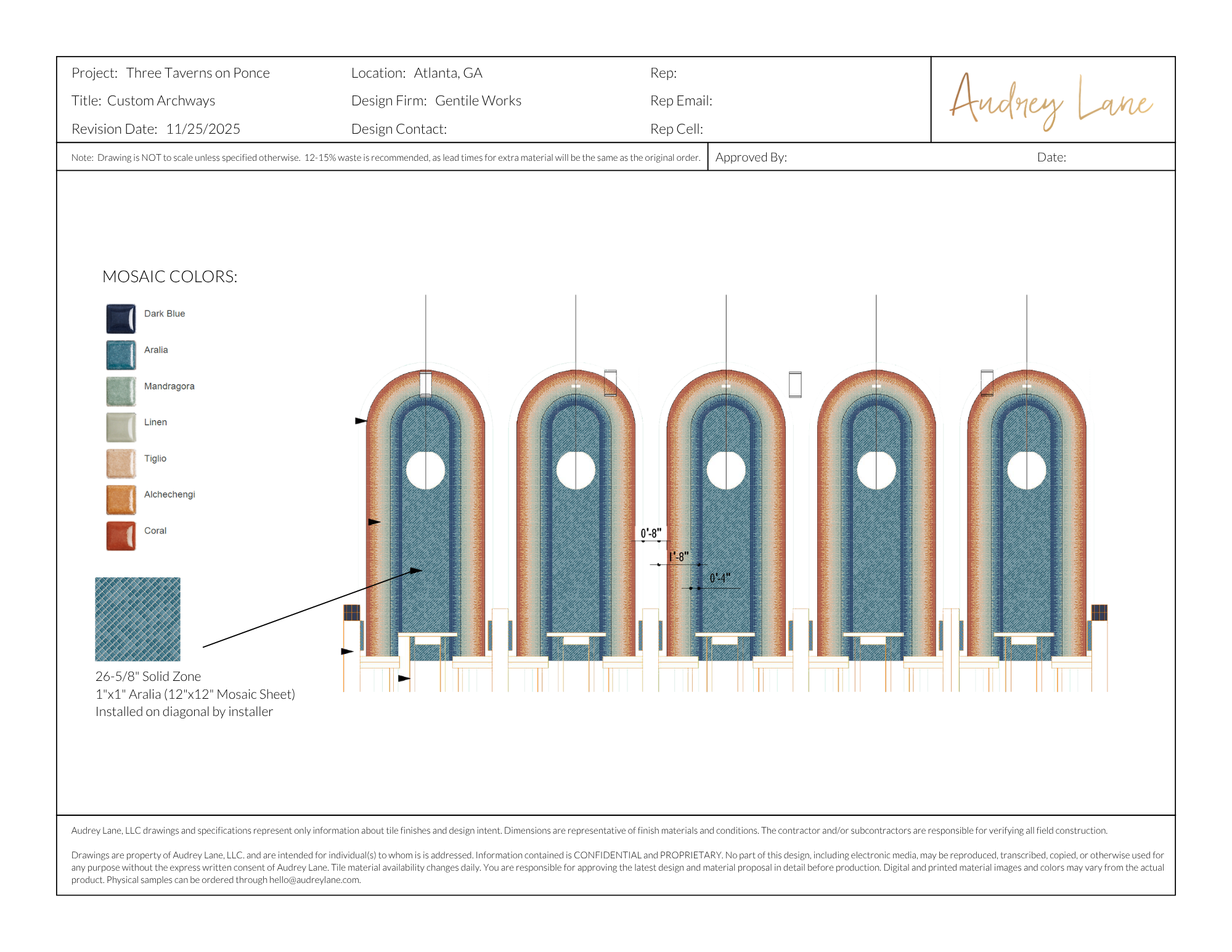
Audrey Lane Muralist specification sheet for custom arch mosaic at Three Taverns on Ponce
From Concept to Installation: How the Muralist Process Works
One of the most powerful parts of the Muralist program is that designers do not have to choose between creativity and clarity.
The project moved from concept to specification to installation through a highly visual process. The Audrey Lane project sheet shows the arch design mapped by grid sections, with white areas clearly noted as “no tile” and only the colored sections produced.
That kind of documentation matters. For custom mosaic installations, the design has to be beautiful, but it also has to be understandable in the field. Sheet mapping, color callouts, and installation visuals help translate a creative idea into a buildable architectural feature.
The installation photos show the arch sections laid out before going vertical, making the craftsmanship and planning behind the final wall even more impressive. Each tiny tile works like a pixel, building the gradient, curve, and color story piece by piece.
A Custom Mosaic Design Tool Made for Designers
Muralist gives interior designers the perfect outlet to showcase their creativity.
Audrey Lane’s easy-to-use mosaic design tool allows designers to create repeating patterns, random blends, gradients, murals, and artwork-inspired installations. Designers can upload imagery, explore color combinations, build custom layouts, and turn their ideas into mosaic concepts that feel personal to the project.
For a project like Three Taverns on Ponce, that flexibility is everything. The design did not need to come from a standard catalog pattern. It could be shaped around the architecture, the brand story, the color palette, and the energy of the space.
That is the beauty of Muralist: it gives designers room to play, but still supports the practical needs of specification.
Why Mosaic Tile Works So Well in Hospitality Design
Custom mosaic tile is especially powerful in hospitality interiors because it delivers both artistry and durability.
Muralist mosaics are made with Italian craftsmanship, natural clay, and high-pressure glazed color, creating a product that balances beauty with performance. The collection was developed to support creative freedom while still offering the durability needed for commercial environments such as restaurants, bars, hotels, pools, public spaces, and feature walls.
For restaurants and breweries, mosaic tile offers a few major advantages:
It creates a memorable design moment.Guests may forget the paint color. They will not forget a glowing wall of custom mosaic arches.
It supports brand storytelling.Color, pattern, and imagery can be customized to reflect the identity of the space.
It performs in commercial environments.Hospitality spaces need materials that can handle real traffic, real cleaning, and real life.
It photographs beautifully.In the age of Instagram, TikTok, Google reviews, and user-generated content, a strong tile moment becomes part of the marketing strategy.
The Collaboration with Gentle Works
Gentle Works brought a thoughtful, place-driven design approach to Three Taverns on Ponce. Their work focuses on spaces that are beautiful, responsive, and connected to cultural, environmental, and economic context.
That philosophy is visible in this project. The mosaic arches feel bold, but not random. They connect to the brewery’s visual identity, the industrial character of the space, and the surrounding Atlanta setting.
The result is a hospitality interior that feels layered, energetic, and deeply considered.
Audrey Lane’s role was to help translate that creative vision into a custom mosaic feature that could be produced, mapped, shipped, and installed with confidence.
Design Takeaway: Custom Tile Is the New Statement Wall
The best statement walls are no longer just painted accent walls or oversized murals. They are integrated, dimensional, material-driven design moments.
Custom mosaic tile gives designers a way to combine color, craft, durability, and storytelling in one surface. At Three Taverns on Ponce, the arched Muralist installation does more than fill a wall. It frames the banquettes, energizes the dining area, and gives the entire space a signature visual identity.
This is where color in interior design is heading: bolder, more personal, more permanent, and far more expressive.
And with the Muralist design tool, designers have a wildly fun way to get there.
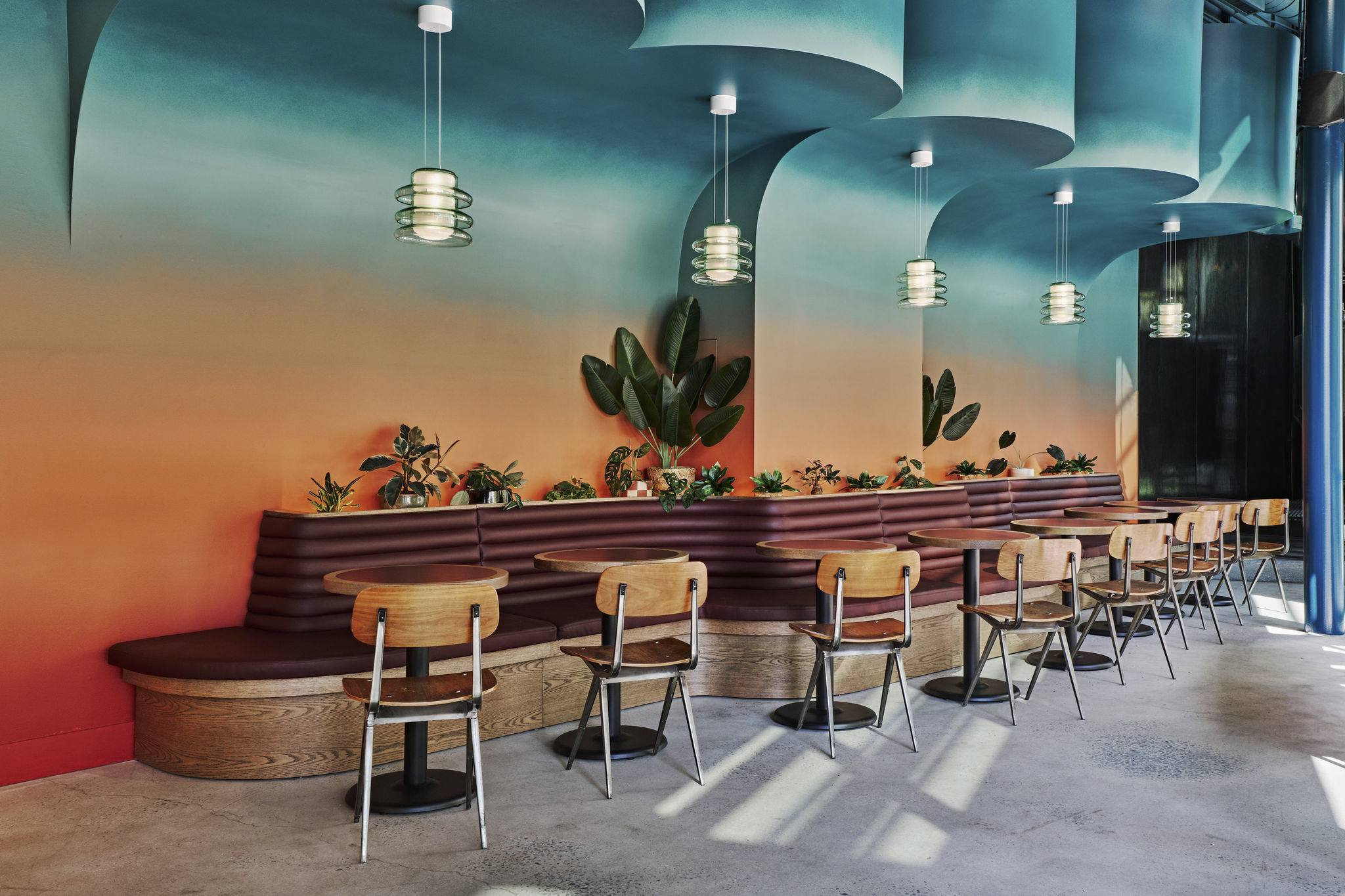
Interior Design by Gentle Works
Frequently Asked Questions About Custom Mosaic Tile
What is Muralist by Audrey Lane?Muralist is Audrey Lane’s custom mosaic tile program that allows designers to create murals, gradients, blends, repeating patterns, and artwork-inspired installations using an intuitive digital design tool.
Can designers create their own mosaic patterns?Yes. Designers can use the Muralist design tool to explore custom colors, patterns, gradients, blends, and image-based mosaic concepts. The tool helps transform creative ideas into specification-ready mosaic designs.
Is Muralist suitable for commercial interiors?Yes. Muralist mosaics are designed for durability and are suitable for a wide range of commercial applications, including restaurants, hospitality spaces, public areas, pools, spas, floors, walls, and feature installations.
What size were the custom mosaic arches at Three Taverns on Ponce?The Audrey Lane specification sheet lists the custom mural size as 72" x 168", produced on 12" x 12" mosaic sheets with a 1/32" grout width for wall application.
Why is custom mosaic tile a good choice for hospitality design?Custom mosaic tile allows designers to create memorable, brand-specific environments with color, pattern, texture, and durability. It is especially effective for restaurants, bars, hotels, lounges, pools, and feature walls where the design needs to make a lasting impression.
Ready to design your own custom mosaic moment?
Explore Muralist and bring your next hospitality, commercial, or residential project to life through Audrey Lane’s custom mosaic design tool.
Start with color. Build with tiny tiles. Create something unforgettable.